Baran Yardimci
L3 Extended Diploma in Music Performance and Production

Future pathway options and how to apply for them.
This page will explain how to correctly apply for university through the UCAS website and everything you need to know before enduring in higher education. UCAS is an application process standardised by the government which has the majority of universities and courses in The United Kingdom available to view with all details of course specifications, entry requirements, details of student life and any other important aspects for students looking to enroll in university.

01
Register to UCAS
The UCAS website has a very easy and manageable way to log in, you begin by accessing the UCAS hub where you are asked to register with your email and your name until you are then brought to a page which helps you set up your account to help you with your higher education search.
They ask you questions about your place of living and which study you are most interested in (postgraduate or undergraduate) and what your end goal is (conservatoire study, finding a job, apprenticeship or a gap year). You then connect your account to wherever you are currently studying and list your pre conceived options for studying so UCAS can recommend you courses and opportunities more suited to you.
02
Choose your universities and courses
Next step is to use the UCAS website to navigate universities which you want to go to, this can depend on course choices, proximity, facilities and much more.
For me the 3 universities that interest me are LIPA (Liverpool institute of performing arts), Falmouth and BIMM (British and Irish modern music institute). I will discuss these choices along with some extra later but it is important to note that 5 universities can be be applied to as a maximum.
Searching for universities is made easy by the UCAS website by having a difference of sorting (relevance, grid, table) and an array of different filters (region, study modes and qualifications).
If you're still unsure of what universties to apply for even with all the resources the UCAS website provides, you can make the most of open days, tours and consulting in friends or family with the relevant information , you can usually also use the personalised website for every university in the country.


03


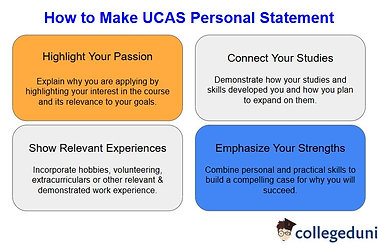

Personal statement
You can only apply once to each university you have chosen with a unified personal statement which is why it is important to write a personal statement for subjects which have very close similarities (Newcastle university, 2024).
Starting from this year, personal statements are now being grouped into 3 questions with a 4000 character limit on all 3 questions, this means you cannot waste characters talking about something unnecessary, this makes everyone have an equal and fair chance and allows for clarity on all the questions with no room for waffle.
The questions are as follows:
1. Why do you want to study this course or subject?
2.How have your qualifications and studies helped you to prepare?
3.What have you done to prepare outside of education?
How to prepare for each question:
For the first question list what about the subject ignites a passion in you, what you love about it, who and why you love it, share a small amount of knowledge you may have on the subject and how you got this knowledge. List achievements within the field of the subject which will show your determination and passion and it's also great to show if you have a career path in mind. Why this specific university or course will help you achieve your hopeful goals would also be a good thing to include to show you've really thought about the universities specific courses.
For the second question instead of focusing on the whys and achievements you've had, discuss the skills you have been transferred in this relevant field to show your qualified for this course, make sure it is only skills from formal education. List how they'll help you succeed in your relevant subject area which you are applying for, also list how they have already helped you succeed wherever you are currently studying. Any purely educational achievements would also be very well received in this question.
For the third and final question here is time to talk about any additional relevant information you feel will properly support and round your application well, reflect the experiences of the extra curricular activities and yet again list the skills you've gained and how they have helped you and will in the future help you with the specific universities and courses you are applying to, this includes responsibilities and duties you have in real life as well as anything you have had to overcome to be where you are now. These can all include official roles at previous educational establishments, extra curricular qualifications and telling of the amount of time and dedication you've put into this specific subject area.
04
Filling in your application
UCAS opens for applications in the September of the year before you want to attend university and closes in late January (unless you are applying for medicine or dentistry in which applications close in October), some colleges and universities have their own personalised deadlines for submission as well. Your application will ask you an array of questions such as your personal info (similair as when you applied to the UCAS hub), Exam results and any other official qualifications you have acquired previously, your employment history and much more. What follows is your personal statement which changes in this newest year of applications, which has already been discussed above.

05

Make your final choices
The progress of your application can always be viewed via the UCAS hub but it may not be as linear as you would like it to be, this is due to the fact that for different candidates, portfolios (a curated collection of personal and relevant creative work throughout your time at other educational establishments) as well as conduction interviews.
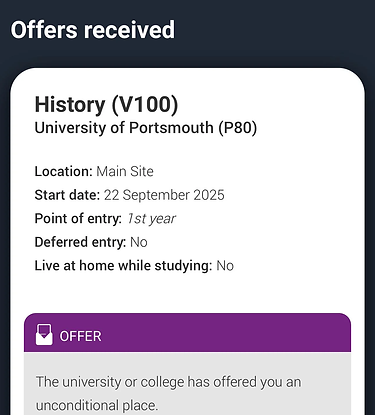
There are 2 types of offers that universities can make: Conditional or unconditional.
Conditional:
A conditional offer from a university usually means that they are willing to offer you a place on the condition that you meet a certain grade in your exam results or that you complete an extra curricular task of some sort as well as anything else qualification wise that the university needs you to complete in order to be offered a place.
Unconditional:
This means that a university is offering you a place regardless of any exam results or other educational results you may receive in the time between you submitting the application and the start of the year you want to attend at that specific university.
Once you've received all possible offers you can have a first choice and a back up second insurance choice. After this you may need to start thinking about student deposits and your living situation in the case of both universities.
06
Results Day
If you have received a conditional offer UCAS hub will show one of 2 different possibilities, if you've been accepted by your 1st or insurance choice. If you have been accepted that is the process complete and you are now an attending student of one of your 2 university choices, once you've fully enrolled.
If you haven't been accepted by either choice due to not meeting the expectations of the conditional offer, you will join something called the clearing process in which you and other applicants who have not received an offer are matched with insitutions that still have unfilled spots (BBC, 2019), 'Clearing is a system that matches university applicants who haven’t had an offer with institutions that still have unfilled places'.

My selected choices:
Below I will be listing 5 higher educations courses that highly interest me and I will most likely apply to.
LIPA (Liverpool Institute of Performing Arts):
Music (BA) Hons:
Entry Requirements:
Description in their own words:
96 UCAS Tariff points
-
3 A-Levels at grade C or above
-
BTEC Extended Diploma: MMM
-
BTEC Diploma: DD
-
UAL Extended Diploma: M
-
T Level: P (C-Plus)
-
IB: 96 points from higher level subjects.
5 GCSES at grade C or above including Maths and English.
Grade 5 in Music Theory is also needed as an extracurricular qualification.
The Liverpool Institute for Performing Arts (LIPA) is a world-leading institution for higher education in performing arts and creative industries, founded in 1996 by Sir Paul Mccartney and Mark Featherstone-Witty in McCartney's former school. LIPA offers specialist vocational training in fields like acting, music, and technical theatre, focusing on learning through practice by collaborating on real productions and projects with industry partners to prepare students for careers in the creative sector. (LIPA, 2025)


Pros:
Cons:
-
Liverpool is city with rich musical history with some names to emerge including: The Beatles, The Zutons, The Wombats, Echo and the Bunnymen, The Wombats and The La's just to name a few.
-
LIPA offers a wide range of vocational experience meaning as well getting the knowledge, you also get hands on work to give you a practical knowledge of your course.
-
Good nightlife and social interaction as Liverpool is home to around 60,000 students from different universities, a hot tourist spot and a former European capital of culture. There is a wide array of nightclubs, bars, pubs, cafes and green spaces to relax. (Unifrog, 2025)
-
Within the university there is a wide range of things to keep yourself occupied with and discover outside of your study time. The state of the art facilities include: The sennheiser television studio (a high definition broadcast studio which is free for student use), A dance studio set with all the neccesary equipment for dance students to use and the Paul McCartney auditorium, the largest performance space which can seat up to 350 people.
-
Not a great experience for those who want a more traditional academic musical experience as a lot of the teaching methods and work is unorthodox in that aspect.
-
Liverpool has quite a high crime rate as it is the 3rd most dangerous city/ town in merseyside, it also has 123% of the highest crime rate in the north west. (Crimerate, 2025)
-
Significant cost as it is such a high level university being £9,535 per year for just an undergraduate course
-
Very hard to get in to with an 8% acceptance rate across all of their courses.
-
Student experience has dropped from Gold to Silver rating by the TEF (teaching excellence framework.)
Falmouth University:
Popular music with professional placement:
Entry Requirements:
A typical offer is between 104-120 UCAS tariff points. As well as at least a grade 4 in english language GCSE is a requirement.
-
A BBC at A-Level.
-
DDD At level 3 extended.
-
C or above at T-Level.
Description In Their Own Words:
Located on the Cornish coast, Falmouth is a lively harbour town with strong maritime roots and a vibrant cultural identity. It’s home to Falmouth University, which specialises in creative arts, media, and design. With beautiful beaches, independent shops, and an inclusive student atmosphere, Falmouth offers an inspiring and friendly environment for students. (UCAS, 2025)


Pros:
Cons:
-
Amazing student experience with it being ranked the top 30 in the country for student satisfaction as well as having a silver TEF rating for student satisfaction.
-
A beautiful coastal area makes it a tourist hotspot making the student out of study experience and nightlife very active and keeps your free generally more filled.
-
A very tight knit low population contributes towards a very low crime rate within the university.
-
A high focus on the creative industries, which is handy as I want to go into popular music.
-
The professional placement gives a far more steady progression from studying and life as a student into starting a career in the relevant field.
-
96% employment rate.
-
The climate is hard to traverse, with very hilly areas making commutes whether via vehicular transport or foot, far more challenging.
-
High fees due to them being affected by a government mandated undergraduate degree tuition increase
-
Internal management has received some poor complaints regarding sub-par bureaucracy and not being informative to enough to students.
-
Poor night life as Falmouth is not particularly known for it's social conventions limiting students social life outside of studies.
-
Only 18 year olds get discounted transport making student extra-curricular fees go needlessly higher.
BIMM (British and Irish Institute of Modern Music:
Music (BA) Hons:
Entry Requirements:
64 UCAS tariff points
-
2 A-Levels at grade C or above.
-
Merit in level 3 music BTEC.
-
Pass in level 3 extended music BTEC
3 GCSES at grade 4 or above including english language as well as completing a BIMM admissions assesment.

Description in their own words:
Music and art collide in this creative, colourful city. Renowned for its drum & bass, trip hop, and punk scenes, and home to massive festivals like Love Saves the Day and St. Pauls Carnival, Bristol is an incredibly exciting place to start your music career – so what are you waiting for? (BIMM Bristol, 2025)


Pros:
Cons:
-
Several successful popular and alternative musicians have come out of the BIMM universities such as: Fontaines D.C., IDLES, George Ezra and The Kooks just to name a few.
-
Has strong relationships with numerous industry partners in the music business such as CRACK magazine, 2000trees and Saffron Records which gives valuable practical work experience.
-
Named by popular establishments such as Billboard magazine as being one of the most renowned and top music business schools.
-
Renowned for collaboration between different departments which is exactly why they are so respected within the local music scene.
-
Teachers are always seasoned professionals with both official and practical experience in the music world.
-
Student reviews describe a poor maintenance of access to resources.
-
Cost of £9,535 a year for an undergraduate degree which is extremely high considering Bristol has relatively low cost of living.
-
Due to the poor resources, some students feel their expectations and what they were promised on their course was not fully delivered to them.
-
Bristol itself is extremely crowded, this actually leaves for lack of social interaction for students who may feel overwhelmed by this, many students describe spending too much of their time at their accommodation in their free time.
-
Crime rates are high in Bristol, with 100 crimes for every 1,000 people and in Great Britain is seen as the 3rd most dangerous city. (CrimeRate, 2024)
Bath Spa University:
Music (BA) Hons:
Entry Requirements:
104-128 UCAS tariff points needed.
-
BBB-BCC In A-Levels
-
DDM-DMM In Level 3 extended diploma
-
Merit in T-Levels
-
32 points at IB
Description in their own words:
Bath Spa University is where creative minds meet. We teach and research across art, sciences, education, social science, and business. The University employs outstanding creative professionals who support its aim to be a leading educational institution in creativity, culture and enterprise. (Bath Spa, 2025)


Pros:
Cons:
-
Bath is one of the oldest cities in the history of Britain, meaning it has a deep rich and cultural history aside from music making it an thriving city and a fun environment to commit to your studies in.
-
Has achieved a silver TEF rating for student satisfaction and experience. (Teaching Excellence Framework)
-
Vast scenery with city landmarks and beautiful countryside to parallel it all.
-
30% discount on all travel for students helping the debt that many students may have to face.
-
Thousands of jobs available for students to earn money, including a wide array of selection for on campus jobs keeping your work and study closesly related for those who prefer.
-
Expensive cost of 9,250 a year for an undergraduate degree.
-
According to student experience there is a lack of support for mental health which severely affects the performance of those students suffering from those sorts of issues.
-
Lack of diversity in the cities population leading to a not very diverse social experience for students with a 65% white population
-
Student shave complained about a lack of commitment and variation of extra curricular activities leaving them very bored with their studies.
-
Lack of clean and organised facilities concerning areas like accomadations and changing rooms.
South Devon College University:
Music Production and Performance Level 5:
Entry Requirements:
48 UCAS tariff points
-
At least 1 A-Level at grade A
-
A pass at BTEC Level 3 extended
-
A pass at T-Level

Description in their own words:
At University Centre South Devon, student life is designed around you - your ambitions, your needs, and your future career. Every degree programme is developed in close partnership with local employers, ensuring you gain the skills and knowledge that truly matter in today’s job market. This collaboration means you’ll graduate ready to hit the ground running. (SDC University)


Pros:
Cons:
-
Gold awarded teaching excellence from the TEF (Teaching Excellence Framework) with interactive teaching styles well suited to young adult students attending.
-
94.7% of higher learners left with employability, 72.5% of which were in managerial/ professional roles
-
Teachers value your mental wellbeing heavily having numerous departments able to deal with mental health crises.
-
Small supportive class sizes well suited for a more personal approach to your learning.
-
A partner of University of Plymouth which means frequent collaboration and shared resourses.
-
Personally, a lack of independence which other universities far away can provide, this is due to the proximity of the university compared to my living situation.
-
Lack of variety in my practical experience as I have already been taking the BTEC diploma of music at South Devon College.
-
Fewer than 1,000 students leads to less student diversity and varied perspective as well as the university being costed more to maintain the student to teacher ratio.
-
Less money put into community colleges meaning there won't be an optimal learning experience due to lack of number or quality of resources.
Apprenticeships:

From the words of the official UK government website, an apprenticeship combines study with on the job training (Mediaofficer, 2025). It is a very uplifting choice for a young person to make, it can offer a sense of authority as you are a fully recognised and paid worker, gaining practical experience in the field you are working in, this also gives a far smoother transition between leaving college or school into the work field and in many cases can land you on a very stable career ladder. The UK government and employers offer up to 7000 types of apprenticeships. Applying for an apprenticeship is very similar to simply to applying for a regular job, you can visit websites such as Gov.uk, the NHS website or the careers page of companies you are interested in working for.
Apprenticeships although less often seen in artistic endeavours, are still present in the music industry and thriving in the UK, some examples of common roles in British music apprenticeships include: Music producer, Concert promoter, Booking agent or Live Sound Technician. There are different level of apprenticeship as well, ranging from level 2 (GCSE Level) to level 7 (Bachelor or Master's degree level).
Blue Lion Training Academy:
Assistant Recording Technician:
Key Details:
Description In Their Own Words:
-
Duration: 24 Months (2 Years)
-
Relevant subjects for qualification: ICT, Music and DT
-
Expected qualifications: A-Levels or equivalent tariff points qualification.
-
Achievement upon completion: Level 4 (Equivalent to foundation degree)
-
Salary upon completion: £24,000

We pride ourselves on providing a high-quality service to both learners and employers through the delivery of apprenticeships and commercial training courses.
Whether you are looking for new opportunities or you want to up-skill, our team will support you every step of the way from enrolment to successfully completing a qualification!
Our tutors are subject matter experts & have “hands on experience” within their chosen field of expertise.
Providing a flexible approach to learning through online, face to face & on-site delivery options. (Blue Lion Training Academy, 2025)

Pros:
Cons:
-
Practical hands on experience as well as being a recognised qualification.
-
Would hone my personal need for development in a studio environment.
-
Earning money instead of having to pay for an alternative such as university.
-
Large apprentice population meaning there is social interaction to be had with people undergoing the same unconventional training as you.
-
Nightlife is considered amazing in Derby with it holding purple flag status for excellent city management and enjoyable night time experiences between 5PM and 5AM.
-
The top recommended music apprenticeship from the UK government website showing official reliability.
-
Majority of earnings will be spent on non discounted transport and accomadation meaning there will be little to no disposable income.
-
Violent crime is ever present in Derby which is where the apprenticeship will be located, 119% of the national average crime was last reported there. (Plumpot, 2024)
-
A less taken seriously qualification compared to a university degree meaning despite the practical work, a less steady route into full tie work.
-
Blue Lion Training academy in the past has had several funding issues, which can affect your learning in ways such as: Lack of dedicated support, Infrequent tutor check-ins and an annoying reliance on paper based materials.
Work Placements:

Work placements are usually a period of temporary working in the relevant field of whatever you are studying as an integrated part of your degree which goes towards your qualification. The aim of these placements is to build experience whilst studying, sort of a halfway agreement between a traditional degree and an apprenticeships which gives you the best of both worlds, they can be both paid and unpaid however it usually depends on the formality of the work placement itself, if it is a traditional '1 year in industry' it will usually be paid however if the placement is a compulsory part of your course it may not be paid.
The main difference between a work placement compared to an internship or apprenticeship is that work placements are usually mandatory additions to whatever course or further education path you are choosing whereas internships and apprenticeships are standalone work experience usually coming with pay or in the case of an internship, no real qualification.
Example of a Work Placement:

Professional placement option at Falmouth University:
When studying popular music at Falmouth university there is an option to elongate the course to 4 years rather than 3 with an additional year of a work placement of your choice to add practical experience to the eventual qualification you receive.
With support from the employment team at the university you will be in charge of finding yourself a one year work placement related to music production and performance, this will help enhance your industry experience during your studies helping you be ready for permanent employment.
This placement must be for at least 24 weeks, you will also create a visual portfolio of your work which will count as the evidence of your own personal growth in the industry for your studies.
Internships:

An internship is a period of entry level work experience, separate from any sort of official qualification, this can range from a week to 12 months and can also be paid or unpaid. Typically undertaken by a graduate looking to have a straight forward progression into work for the field or industry they have studied. Internships are good indicators for employers to see a person's relevant real world experience in a certain job. Internships are usually heavily competitive field to get into especially for industries like the creative arts in which internships are very sparing and not very commonplace to find, even more so at big companies such as Sony or Parlophone as these entry level positions require a lot of skill to partake in.
Some key differences between an internship and for example a work placement or an apprenticeship would be that unlike the aforementioned 2, internships often run through summer months and are far more time consuming, as well as not guaranteeing pay, whereas an apprenticeship does. The issue of qualification also differentiates internships as they are usually partaken in for post gruaduated students meaning they do not count as an official curricular qualification, work placements and apprenticeships on the other hand are formally recognised qualifications that an undergraduate student can partake in.
Example of an Internship:
Sony Music Internships:
Sony Music UK (Based in London) holds annual applications for internships for their studios they have within the UK housing jobs within marketing, digital, creative and finance just to name a few.
The internships is typically fully paid as well as lasting 12 months. You will have the chance to work with popularly renowned record labels such as Columbia, RCA, Ministry of sound and AWAL.
Sony music is a very competed for an renowned place to work an internship at due to the big names that emerge from the label and the countless industry connections which will be of use to your musical career going forward creating lots of future opportunities.

Self-Employed/ Freelancing:
Pros:
Cons:
-
Creative and financial control over your own assets and not being tied to a contract or having financial limits with what money you have earned.
-
Owning the own rights to songs and pieces you trademark meaning potential long term financial gain.
-
More control over who you work with meaning there is less chance of a hostile or mean spirited work environment.
-
Compared to being signed with a label, you keep a lot more of your earnings than the average signed musician.
-
You can build your brand through multiple income streams, including: Physical music (CDs/vinyls), merchandise, Streaming platforms, licensing, performing and fan support.
-
A flexible schedule meaning you can work whenever you please leading to your workload being less stressful.
-
No means of a stable fixed income making it harder to apply for government mandated programmes such as a mortgage or a rent which could affect your living standard.
-
Far less stable working hours meaning it can be difficult to find work from time to time leading to not very stable income which is not convenient for the majority of living situations.
-
No government funding or help for things such as health insurance and retirement contributions.
-
Requires quite a large amount of self motivation meaning it can be hard to pressure yourself to get your own work done; the downside of being flexible
-
Dependant upon the type of work it can be heavily isolating which does not suit the best way in which many people work.
-
More on the business/ paperwork side which can be draining, this is due to more individual clients and you not working for a business or employing body which would usually sign off on all the paperwork you would otherwise have to do.
Real Life Advertised Job Role:
Label Manager ( Cheerful Music):
Qualification Requirements:
-
Bachelor's degree in a musical study.
-
English Speaking (and preferably Chinese)
-
Managemant experience of some sort (whether it be in the world of music or not)
Key Details:
-
Pay is £35,000-40,000 annually.
-
Full-Time
-
Monday-Friday schedule
-
Based in London

Job Description Given:
As the Label Manager at Cheerful Music, you will be in charge of running the UK office on a daily basis. This includes, but is not limited to, working with our CEO to find and pursue business opportunities, as well as establishing and preserving connections with the UK and CN teams, artists, producers, studios, distributors, and any other outside parties.
You will also be in charge of managing KPIs, conducting interviews, contracts, and onboarding, among other HR and employee-related tasks. (Cheerful Music, 2025)